
 (800) 992-6924
LTL Freight Class Explained


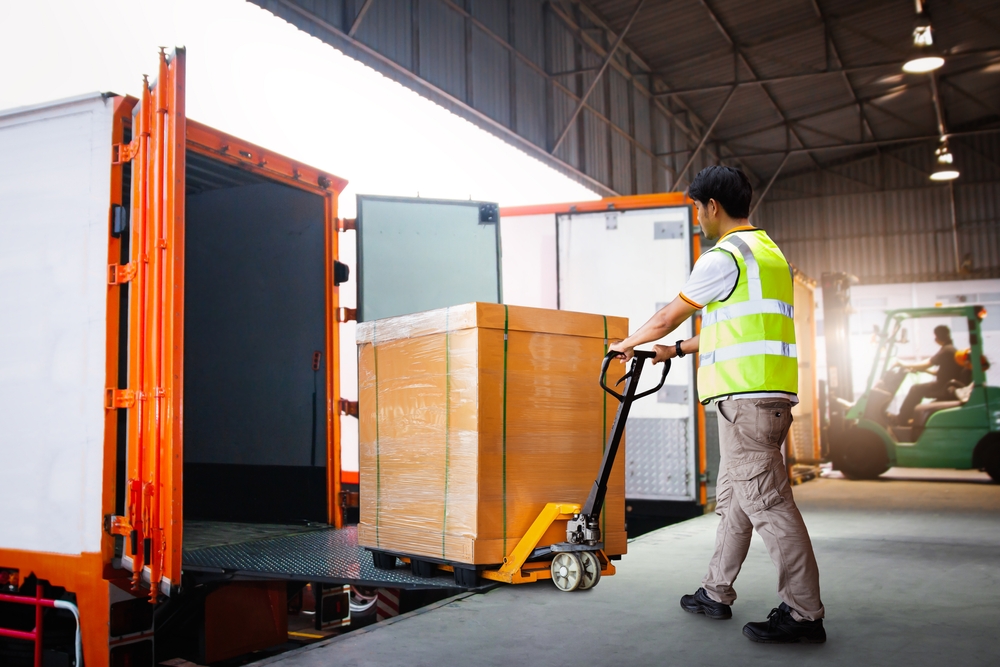
If your Los Angeles business ships pallets, inventory, or large parts via LTL (Less-Than-Truckload), it’s important to understand freight class. It influences your cost, carrier choice, and whether your shipment gets reclassified later. In this guide, we’ll walk you through what freight class means under the NMFC system, how to calculate it, and tips to avoid costly surprises.
Table of Contents:
- What Is Freight Class?
- The 4 Key Factors That Determine Freight Class
- NMFC Code Chart with Examples
- How Freight Class Affects Your Costs
- How to Determine Your Correct Freight Class
- Common Mistakes & How to Avoid Them
- Tips for Los Angeles Small Businesses
- Contact Box City for LTL Freight Shipping
What Is Freight Class?
Freight class is a standardized system used primarily in the U.S. for LTL shipments. It groups goods into different classes, numbered from 50 (lowest) to 400 (highest), based on how easy or difficult it is to move, store, and protect them. This system is maintained by the National Motor Freight Traffic Association (NMFTA) via the NMFC (National Motor Freight Classification).
When you are quoted for LTL freight, carriers use your shipment’s freight class (along with weight, origin/destination, and surcharges) to build the rate. If your shipment is misclassified, the carrier may reclass it upon inspection and charge you the difference.
The 4 Key Factors That Determine Freight Class
Each shipment is evaluated along four dimensions:
Density
Calculated as weight divided by volume (pounds per cubic foot). The denser the package, the lower (cheaper) its class. Less dense, bulkier items tend to fall into higher classes.
Stowability
How easily your goods can be placed or “stowed” within a trailer along with other freight. Irregular shapes or items that block stacking increase class due to inefficient use of trailer space.
Handling
This considers how easy or difficult it is to load/unload your shipment. Heavy, awkward, fragile, or oddly shaped items that require special handling may be classed higher.
Liability
Risk of damage, theft, spoilage, or how much your goods might damage adjacent freight. Fragile or highly valuable items often land in higher classes to account for liability exposure.
These four characteristics combine to define your shipment’s class under the NMFC/NMFTA rules.
NMFC Code Chart with Examples
Below is a sample chart illustrating freight classes, density ranges, and example commodities.
| Class | Density Range (lb/ft³) | General Description | Typical Commodities |
| 50 | 50+ | Extremely dense, sturdy, easy to transport | Cement blocks, steel rods, bricks |
| 55 | 35–50 | Heavy and regular-shaped | Hardwood planks, carpet rolls |
| 60 | 30–35 | Durable and compact items | Machine parts, car parts |
| 65 | 22.5–30 | Stackable and space-efficient | Bottled drinks, boxed tool kits |
| 70 | 15–22.5 | Moderate weight and manageable | Flat-packed furniture, canned foods |
| 85 | 12–15 | Large with handling concerns | Crated equipment, metal hardware |
| 92.5 | 10–12 | Bulky, valuable, require some care | Refrigerators, large toolboxes |
| 100 | 8–10 | Lower density, general goods | Garden gear, fabric covers |
| 125 | 6–8 | Delicate and lightweight | Small kitchen appliances, lamps |
| 175 | 4–6 | Low density, fragile construction | Cushioned furniture, armchairs |
| 250 | 2–4 | Difficult to stow or pack, valuable | Bamboo chairs, stereo systems |
| 300 | 1–2 | Very fragile and light | Mounted antlers, fragile decor |
| 400 | <1 | Extremely delicate, high-value | Sculptures, expensive electronics |
Note: Some commodities carry fixed NMFC classes regardless of density or packaging. Hot tubs are one example.
How Freight Class Affects Your Costs
Because freight class accounts for how difficult your shipment may be for a carrier (space, handling, risk), it directly impacts pricing. Lower-class items are cheaper per unit of weight, while higher classes cost more. If a carrier inspects and disagrees with your declared class, they may reclass your freight and issue a chargeback.
Additionally, for 2025, the NMFTA has rolled out changes: most freight will now be classed using a more precise 13-tier density-based scale, and many items have been reclassified. Keeping classification data current is now more important than ever.
How to Determine Your Correct Freight Class
1. Measure Weight & Dimensions Accurately
Weigh your freight (including packing materials), then measure its cubic footprint (L × W × H). Divide cubic inches by 1,728 to get cubic feet.
2. Calculate Density
Use the formula:
Density = total weight (lbs) ÷ total cubic feet
3. Reference a Freight Class Chart
Compare your density to the chart above to find the approximate class.
4. Use NMFC Lookup Tools
Query the official NMFC database or ClassIT+ tools to find the correct NMFC code for your commodity. These codes may override density in some cases.
5. Consult Your Carrier or Broker
They often check the class and can flag discrepancies or help you confirm the right class to avoid reclassification later.
Common Mistakes & How to Avoid Them
- Overestimating Density (using smaller dimensions or excluding packaging)
- Underestimating Handling or Liability: ignoring how fragile or awkward your item is
- Leaving out the NMFC code or commodity description on the Bill of Lading (BOL)
- Relying solely on general freight class calculators: they’re estimates
- Not updating classification data: especially with the 2025 NMFC changes
If your BOL is vague (“miscellaneous freight”), the carrier may automatically use a higher class, costing you more.
Tips for Los Angeles Small Businesses
- LA-based companies ship to national and regional markets. A wrong class can mean inflated freight bills or refused loads.
- Many West Coast carriers use strict inspection protocols. Errors on classing are scrutinized.
- The 2025 NMFC updates mean outdated pricing models may misclassify your goods. Stay current.
Contact Box City for LTL Freight Shipping
Freight class is complex, but Box City can get it right for you. By weighing and measuring carefully, and using up-to-date NMFC tools, we can help LA small businesses avoid reclass fees, ship smarter, and keep logistics costs predictable. If you need help classifying or quoting an LTL shipment, we’re here to support you every step of the way.